Hi! Sorry, I've been overseas traveling, and my judging philosophy didn't get in the Judge Paradigm Book.
Judge 04J142 National Forensic League NFL Nationals 2008 Desert Lights Henderson Las Vegas Nevada Foothill High School FHS judging book paradigm book policy debate cross-examination debate team debate judge code judging code judging philosophy judging paradigm list of judges.
Here's the data in the form it's listed in the Judge Paradigm Book:
04J142 Nathaniel Dempsey Clayton High School MO Yes, No, No, Yes, No, Yes, 7 years, 21-30 rounds, TR, 4, NP, 7, 2, 3, 2, 2, 3, 3.
For Question 1B, I actually did do a tiny bit of policy debate in college (and I did a fair amount of parliamentary debate) but not enough that someone who was on the circuit regularly would consider me to have been an NDT or CEDA debater, so for the purposes of telling you about my experience, the technical answer is I didn't do much CEDA/NDT debate in college.
For Question 3, after TR, I would rank PM, SI, SS, GP, and finally HT.
For Questions 7 through 12, I made notes off to the side:
7) That doesn't necessarily mean I like T debate.
8) If they're actually competitive (CPs)
9) Make sure they link (generic positions)
10) Unless you're talking about things like CPs (conditional positions)
11) Just not too much--I want to see things get done (theory)
12) I don't really like Ks, but if you run it well and give me a clear way to evaluate it, do what you think is best for your strategy (critiques)
[Edit] removed cross-links to other web sites.
6/15/2008


5/10/2008
do not spend your rebate
Exciting news! My IRS rebate posted to my bank account this week. I've got $600 to spend in Europe I didn't have a week ago.
Except, I don't. Don't spend your $300 or $600. It's not money. It's a loan. When the government spends money on war, but it doesn't tax people who have money to pay for war, it instead borrows money from those people. The trouble with that is that those people want their money back.
And they want it back with interest. In other words, this is not a rebate. It's a tax.
If you want to decrease your tax burden, convince your members of Congress to reduce defense spending, reduce agricultural subsidies, reduce deductions in the tax code, and increase enforcement against large tax cheaters.
Now that would lead to a nice rebate.
Except, I don't. Don't spend your $300 or $600. It's not money. It's a loan. When the government spends money on war, but it doesn't tax people who have money to pay for war, it instead borrows money from those people. The trouble with that is that those people want their money back.
And they want it back with interest. In other words, this is not a rebate. It's a tax.
If you want to decrease your tax burden, convince your members of Congress to reduce defense spending, reduce agricultural subsidies, reduce deductions in the tax code, and increase enforcement against large tax cheaters.
Now that would lead to a nice rebate.
4/26/2008
full power to the shields
Since we haven't developed these kinds of shields yet, and since these shields have been great for war profiteers but can't actually do anything useful, we're left with this. It's low-tech, and it doesn't involve massive taxpayer support.
It's the Iran peace shield. Cool, huh? Don't get me wrong, I love having Boeing and B-2s in my state.
You're just a total nut job if you think using them against Iran is a good thing to do.
It's the Iran peace shield. Cool, huh? Don't get me wrong, I love having Boeing and B-2s in my state.
You're just a total nut job if you think using them against Iran is a good thing to do.
4/25/2008
illicit markets are the coolest
Jodi and I are watching a show on PBS about illicit markets. Aside from the exaggeration of the uniqueness of now (as if black markets haven't always existed) it's pretty cool. I find illegal markets a lot more intellectually stimulating than legal ones. There's just so much going on, so much innovation, you always have to be a step ahead of the people chasing you. The power of people's individual choices to overwhelm the best laid plans of governments and corporations. The reminder that criminal is a label of one's relation to arbitrary laws (and the arbitrary enforcement of those laws), not a statement on one's abilities in sales, marketing, operations, strategy, entrepreneurship, interpersonal relations, or other valuable, marketable, productive skills.
And of course, the overwhelming economic, human, and national security case for ending crime as we know it by decriminalizing much of what we call crime. Consumers get inferior products when pushed into gray and black markets, taxpayers get screwed by the massive bills which don't do anything, and organized crime and terrorist organizations have access to massive revenue and transportation networks.
But hey, it's hard to compromise on good public policy when it comes to issues like this. After all, the GOP is all about big government, and they hate free markets.
And of course, the overwhelming economic, human, and national security case for ending crime as we know it by decriminalizing much of what we call crime. Consumers get inferior products when pushed into gray and black markets, taxpayers get screwed by the massive bills which don't do anything, and organized crime and terrorist organizations have access to massive revenue and transportation networks.
But hey, it's hard to compromise on good public policy when it comes to issues like this. After all, the GOP is all about big government, and they hate free markets.
4/19/2008
to laugh or to cry
Oh, this is just too much. One of my main hesitations about Senator Obama has been his position that we need to pay more attention to Afghanistan, not less.
But regardless of how you feel about US troops there, this is pretty funny, in a very disturbing way.
Nato forces mistakenly supplied food, water and arms to Taliban forces in southern Afghanistan, officials today admitted.
That NATO has been so unsuccessful in militarily occupying Afghanistan is a very sobering reality. The last thing we need to be doing is helping the Taliban.
But regardless of how you feel about US troops there, this is pretty funny, in a very disturbing way.
Nato forces mistakenly supplied food, water and arms to Taliban forces in southern Afghanistan, officials today admitted.
That NATO has been so unsuccessful in militarily occupying Afghanistan is a very sobering reality. The last thing we need to be doing is helping the Taliban.
4/03/2008
call the season
It's official. Let's just end it now. The Royals are in first place. In fact, they're the only undefeated team in baseball.
That can't last long. Can it?
That can't last long. Can it?
3/31/2008
3/29/2008
traitors or liars
Or both?
(P) Attorney General Mukasey's comments in San Francisco are really interesting:
...we knew that there had been a call from someplace that was known to be a safe house in Afghanistan and we knew that it came to the United States. We didn't know precisely where it went. You've got 3,000 people who went to work that day, and didn't come home, to show for that...
Did we know about a safe house in Afghanistan that was making phone calls in 2001? If so, why did the Bush Administration choose not to perform surveillance of those terrorists, as explicitly allowed by the Foreign Intelligence Surveillance Act? What part of foreign, intelligence, and surveillance does the Bush Administration not understand?
And if we didn't know that, will we now be treated like kindergarteners as Mukasey tells us he didn't say that we knew that? It's definitely a new low when the Administration doesn't even try to tell believable lies anymore.
(P) Attorney General Mukasey's comments in San Francisco are really interesting:
...we knew that there had been a call from someplace that was known to be a safe house in Afghanistan and we knew that it came to the United States. We didn't know precisely where it went. You've got 3,000 people who went to work that day, and didn't come home, to show for that...
Did we know about a safe house in Afghanistan that was making phone calls in 2001? If so, why did the Bush Administration choose not to perform surveillance of those terrorists, as explicitly allowed by the Foreign Intelligence Surveillance Act? What part of foreign, intelligence, and surveillance does the Bush Administration not understand?
And if we didn't know that, will we now be treated like kindergarteners as Mukasey tells us he didn't say that we knew that? It's definitely a new low when the Administration doesn't even try to tell believable lies anymore.
3/23/2008
happy easter
Among other things, Easter is a good time to put things in perspective. A time to think about cleansing and newness. A time to distinguish small things from the big picture.
It was with this mindset that I started doing a little reading this afternoon, and the first article I ran across was from the Boston Globe about credit problems. It's a good, straightforward article highlighting various issues people are running into. In fact, it's noticeable for being so straightforward it's almost cliched. The same story could have been written months ago, or months from now, in any paper in the country.
We all know the language by now. We're in a 'credit crunch', a 'subprime crisis'. Lending standards are being 'tightened'. During the 'housing boom', lenders 'relaxed their standards'. Some of the more sarcastic reference a 'subcrime' crisis. Even the title of the article is interesting in how we are supposed to have a conditioned response to it, 'Qualified borrowers face credit squeeze'. The problem, we are told ad nauseum, is that qualified people can't get credit. There's just no money out there.
Now, it's good that the financial press and corporate media generally are talking about this issue. That's much better than ignoring the problem.
But after so many months of stories like these, the complete picture still isn't being told. The problem at its core isn't that there's a shortage of money; there's lots of liquidity for things that have value. Visa just had one of the largest IPOs in history. Corporations are sitting on something like $1.6 trillion in cash and $2 or $3 trillion more in short-term cash equivalents. As savings rates for average households were declining, corporate savings rates were hitting all time highs.
No, the key in that Boston Globe headline is not 'credit crunch'. It's 'qualified'. The obstacle we face, that we have been facing for many years, is a dearth of qualified borrowers. The 'housing bubble' was created precisely by lenders who gave money to people who can't afford what they're buying. Some specific policies related to interest rates and deregulation and so forth heightened the problem and explain the timing, and likely there was some criminal malfeasance involved as well as the usual predatory lending, too, but there's more to it than just that.
All the fancy technical analysis and long-winded answers and financial jargon can certainly serve as a useful distraction for particular actors that may have engaged in outright fraud or otherwise broken the law and may find themselves testifying before Congress, or other actors writing a book to explain why it's not their fault, but we are a very rich country. To become a crisis where people are literally being kicked out of their homes, it takes something more fundamental.
The fundamental question is this. Should someone willing to work full-time be able to comfortably afford decent housing? [And related to that, particularly in our tax code, do we place value on owning that residence?] Savings are low, people live paycheck to paycheck, and ultimately, people default on their mortgages, because the job they're in doesn't pay enough to afford their home. Wages, not credit, explain our current difficulties. The rest just makes the scale of the crisis more profound.
Now that's a question I would love to see headlining CNN this evening. I would love to see people talk about why we have people without homes, construction workers without jobs, and corporations with nothing to spend money on. There's no one right answer. But the first step is talking about the whole picture.
At least, after basketball. Gotta keep my facebook standing.
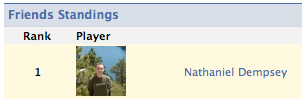
It was with this mindset that I started doing a little reading this afternoon, and the first article I ran across was from the Boston Globe about credit problems. It's a good, straightforward article highlighting various issues people are running into. In fact, it's noticeable for being so straightforward it's almost cliched. The same story could have been written months ago, or months from now, in any paper in the country.
We all know the language by now. We're in a 'credit crunch', a 'subprime crisis'. Lending standards are being 'tightened'. During the 'housing boom', lenders 'relaxed their standards'. Some of the more sarcastic reference a 'subcrime' crisis. Even the title of the article is interesting in how we are supposed to have a conditioned response to it, 'Qualified borrowers face credit squeeze'. The problem, we are told ad nauseum, is that qualified people can't get credit. There's just no money out there.
Now, it's good that the financial press and corporate media generally are talking about this issue. That's much better than ignoring the problem.
But after so many months of stories like these, the complete picture still isn't being told. The problem at its core isn't that there's a shortage of money; there's lots of liquidity for things that have value. Visa just had one of the largest IPOs in history. Corporations are sitting on something like $1.6 trillion in cash and $2 or $3 trillion more in short-term cash equivalents. As savings rates for average households were declining, corporate savings rates were hitting all time highs.
No, the key in that Boston Globe headline is not 'credit crunch'. It's 'qualified'. The obstacle we face, that we have been facing for many years, is a dearth of qualified borrowers. The 'housing bubble' was created precisely by lenders who gave money to people who can't afford what they're buying. Some specific policies related to interest rates and deregulation and so forth heightened the problem and explain the timing, and likely there was some criminal malfeasance involved as well as the usual predatory lending, too, but there's more to it than just that.
All the fancy technical analysis and long-winded answers and financial jargon can certainly serve as a useful distraction for particular actors that may have engaged in outright fraud or otherwise broken the law and may find themselves testifying before Congress, or other actors writing a book to explain why it's not their fault, but we are a very rich country. To become a crisis where people are literally being kicked out of their homes, it takes something more fundamental.
The fundamental question is this. Should someone willing to work full-time be able to comfortably afford decent housing? [And related to that, particularly in our tax code, do we place value on owning that residence?] Savings are low, people live paycheck to paycheck, and ultimately, people default on their mortgages, because the job they're in doesn't pay enough to afford their home. Wages, not credit, explain our current difficulties. The rest just makes the scale of the crisis more profound.
Now that's a question I would love to see headlining CNN this evening. I would love to see people talk about why we have people without homes, construction workers without jobs, and corporations with nothing to spend money on. There's no one right answer. But the first step is talking about the whole picture.
At least, after basketball. Gotta keep my facebook standing.

3/02/2008
vegas, er, henderson
This weekend has been very exciting! NFL districts are the culmination of the year's worth of competition for speech and debate. That's the National Forensic League, by the way, not the National Football League, nor CSI type work. [No offense MSHSAA, but frankly, at least in the Northwest district, you absolutely blow.] It's the kind of weekend where I sleep little (never a preference of mine!) and make notes of lots of comments worth blogging about but then forget or lose motivation by the time I have time to do so.
This year was extra exciting because one of the debate teams at Clayton had a good chance to go to the national tournament, being held this year in Henderson, NV. Don't worry, it's nowhere near Las Vegas...
Well not only did Michal and Ka end up qualifying to nats, they were District champs! Woohoo. There is lots of value in debating. But at the end of the day, the point is to win! Now we've got three months to get them ready to compete at a national level. And I've got to convince my work to let me take another week off in June. This is where it starts getting to the limit of my personal experience. I know what it takes to compete at a national level, but I'm not so familiar with actually winning deep into the tournament. What I do know is that you have to take advantage of the opportunities you get, which is pretty much one of those cheesy life lessons you really do learn doing debate.
And while I'm at it, I just have to say my bluejays kicked some mighty fine Heart of America butt.
This year was extra exciting because one of the debate teams at Clayton had a good chance to go to the national tournament, being held this year in Henderson, NV. Don't worry, it's nowhere near Las Vegas...
Well not only did Michal and Ka end up qualifying to nats, they were District champs! Woohoo. There is lots of value in debating. But at the end of the day, the point is to win! Now we've got three months to get them ready to compete at a national level. And I've got to convince my work to let me take another week off in June. This is where it starts getting to the limit of my personal experience. I know what it takes to compete at a national level, but I'm not so familiar with actually winning deep into the tournament. What I do know is that you have to take advantage of the opportunities you get, which is pretty much one of those cheesy life lessons you really do learn doing debate.
And while I'm at it, I just have to say my bluejays kicked some mighty fine Heart of America butt.
Subscribe to:
Posts (Atom)